Climate dynamics
Polar jet stream waviness
Reconstructing changes in polar jet stream waviness since 1901 to separate natural variability from emerging climate-change signals.
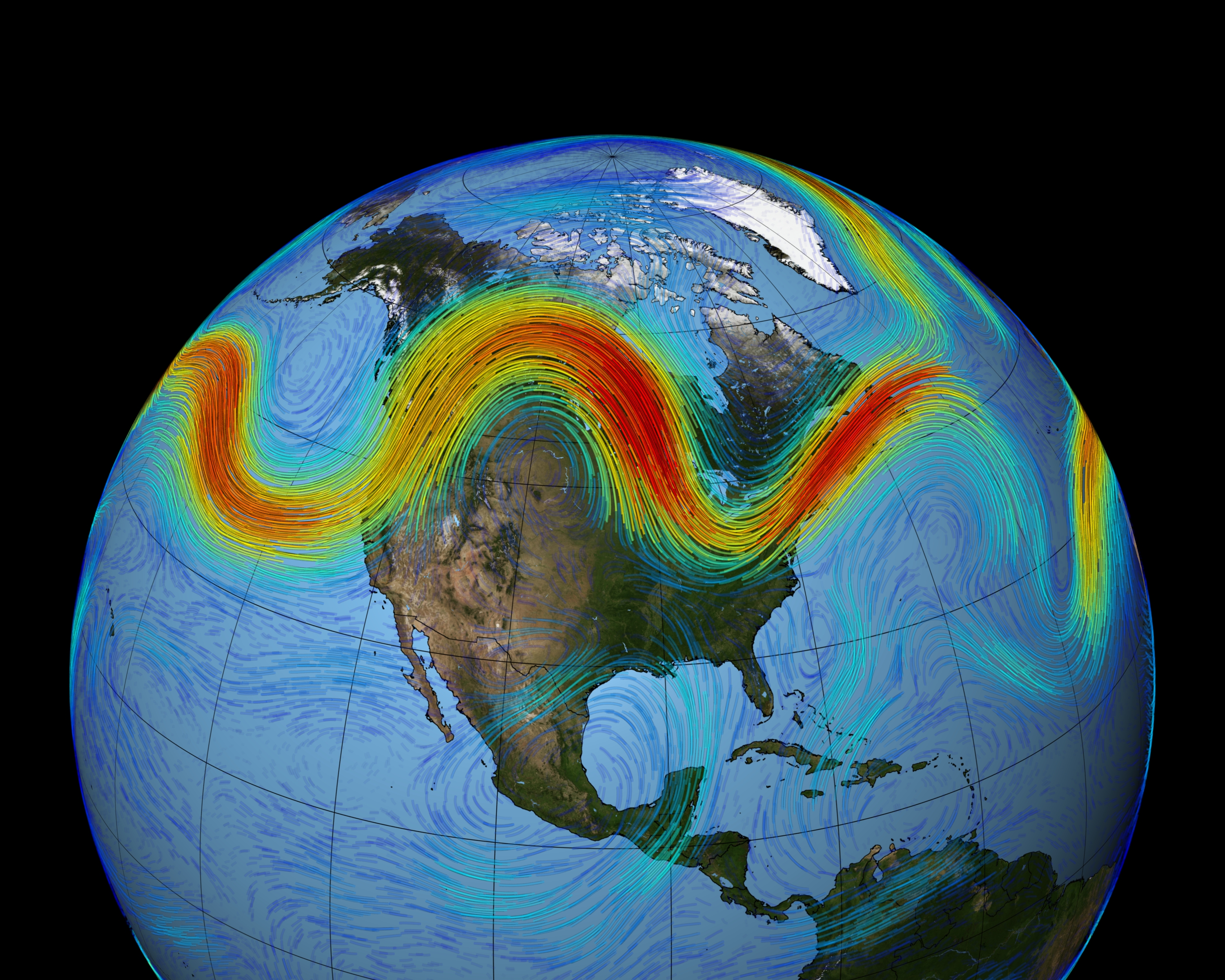
The polar jet stream is a fast-moving ribbon of winds that steers winter storms and controls the movement of Arctic air across the Northern Hemisphere. In recent decades, unusually large waves in the jet stream have been linked to extreme cold outbreaks, winter storms, and persistent weather patterns. Whether these changes are driven by human-caused climate change or are part of the atmosphere's natural variability remains a central question in climate science.
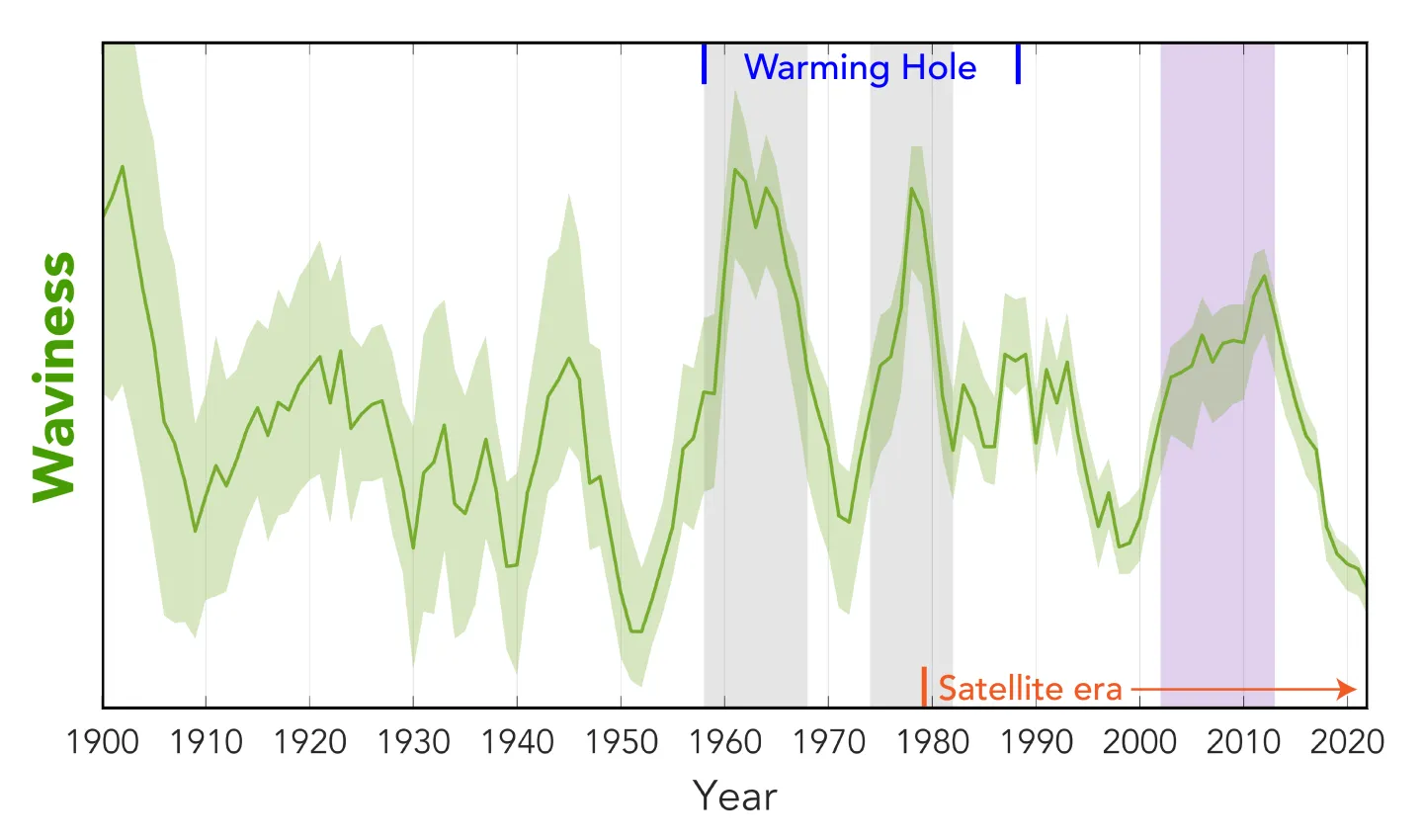
To investigate this, I developed a new 125-year reconstruction of North American winter jet stream waviness using self-organizing maps and multiple historical climate datasets. As shown in Figure 1, today's highly wavy jet stream is not unprecedented—the mid-twentieth century experienced similarly large meanders, despite occurring long before the satellite era. These episodes of enhanced waviness coincided with the eastern U.S. "warming hole," and my work shows they were responsible for roughly two-thirds of its wintertime cooling. By placing recent atmospheric circulation in a century-long context, this research helps distinguish natural variability from long-term climate change and improves our understanding of the mechanisms behind weather extremes.
Related publications