North Pacific atmosphere
Siberian wildfire
Reconstructing 1,200 years of southeastern Siberian fire and the seasonal climate dynamics that control burning.
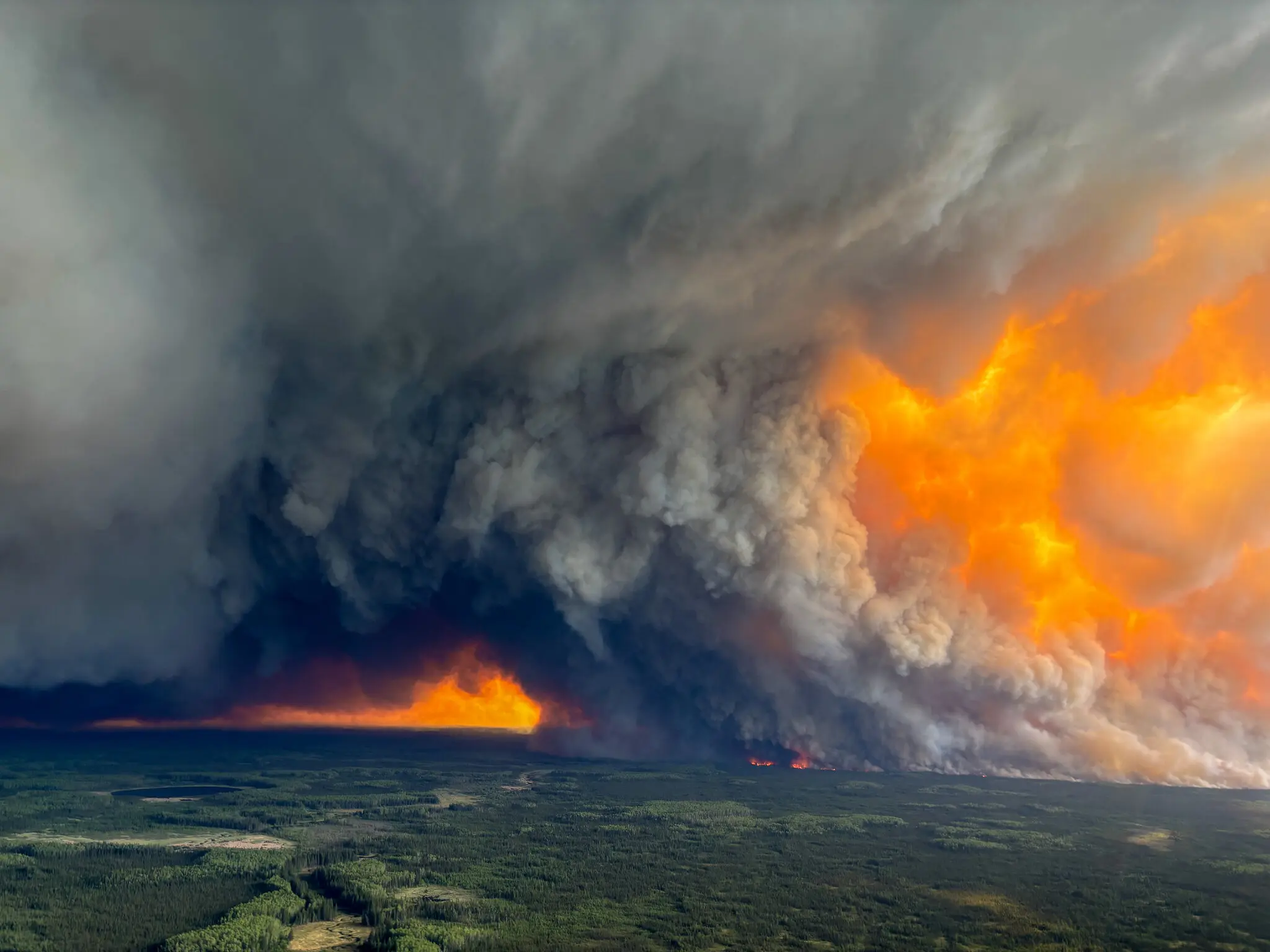
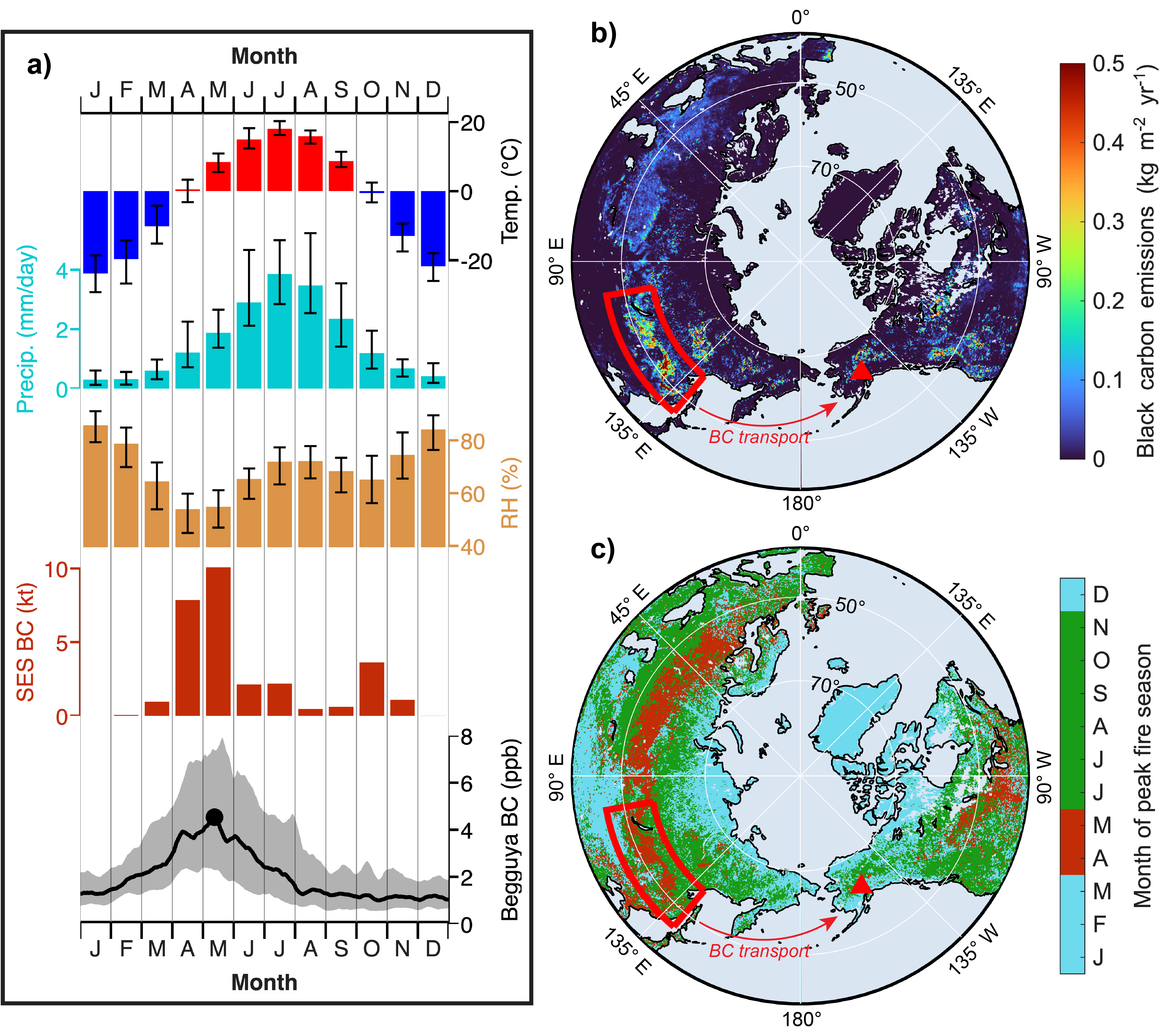
The boreal forests of southeastern Siberia are among the most fire-prone ecosystems on Earth, yet direct observations of wildfire activity extend back only to the 2000s. To understand how fire has changed over longer timescales, I use ice cores from the Begguya summit plateau in Denali National Park, Alaska. As illustrated in Figure 1, smoke from springtime Siberian wildfires is carried across the North Pacific, where snowfall at Begguya preserves black carbon from those fires.
The 1,200-year ice-core record reveals that southeastern Siberian fire activity was relatively high during the warm Medieval Climate Anomaly, declined during the cooler Little Ice Age, and has increased rapidly since the late nineteenth century alongside industrial-era warming. These long-term changes are closely linked to climate: warmer late winters promote earlier snowmelt and a longer fire season, while shifts in the East Asian Summer Monsoon influence fuel moisture and the frequency of large wildfires. Surprisingly, the record also shows little evidence that industrial pollution substantially increased black carbon reaching Begguya. Together, these findings provide a long-term perspective on how boreal fire responds to climate change while improving our understanding of the atmospheric processes that connect Asia, the North Pacific, and the Arctic.
Related publications
Seasonal climate drivers of southeastern Siberian wildfire over the last 1,200 years
In review